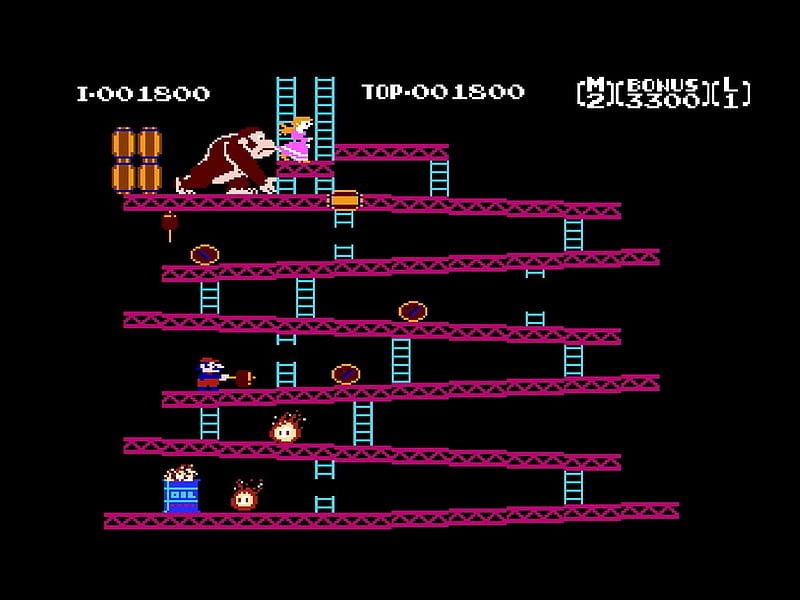
Donkey Kong’s gameplay was revolutionary for its time. Players control Jumpman as he navigates a construction site, dodging barrels, fireballs, and other obstacles thrown by Donkey Kong. The game’s multi-stage levels, each with its unique layout and challenges, demanded both skill and strategy. The sense of verticality, climbing ladders, and jumping across platforms, was a novel concept that captivated players.
The game features four distinct stages:
Stage 1: The construction site with barrels.
Stage 2: The fiery furnace.
Stage 3: The elevator stage.
Stage 4: Confrontation with Donkey Kong at the top.
Each stage progressively increases in difficulty, testing the player’s reflexes and determination.
The Birth of Iconic Characters
Donkey Kong introduced two of Nintendo’s most iconic characters:
Mario: Originally named Jumpman, this character would later become the face of Nintendo and one of the most recognizable figures in popular culture.
Donkey Kong: The antagonist of the game, Donkey Kong’s character has evolved over the years, starring in his own series of games.
Pauline: The damsel in distress, originally named Lady, who Mario strives to rescue.
The game’s simple narrative, told through brief cutscenes, was groundbreaking for arcade games at the time.
Historical Significance and Legacy
Donkey Kong’s success was pivotal for Nintendo. It helped the company establish itself in the North American market and paved the way for future hits like Super Mario Bros. and The Legend of Zelda. The game’s innovative gameplay, memorable characters, and challenging level design influenced countless platformers that followed.
The game’s legacy extends beyond its immediate impact. It has been ported to numerous consoles and home computers, ensuring its continued availability to new generations of players. Donkey Kong’s influence can still be seen in modern games, a testament to its enduring appeal and groundbreaking design.
Game Details
Title: Donkey Kong
Genre: Platformer
System: Arcade
Release Date: 1981
Developer: Nintendo R&D1
Designer: Shigeru Miyamoto
A Timeless Classic
Donkey Kong is more than just a retro arcade game; it’s a piece of video game history. Its innovative gameplay, memorable characters, and historical significance make it a timeless classic. Whether you experienced it in the arcades in 1981 or are discovering it for the first time today, Donkey Kong remains a captivating and influential game.
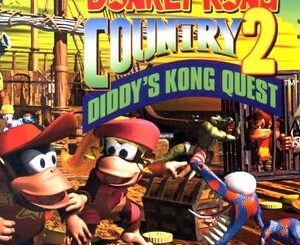
Donkey Kong Country 2: Diddy’s Kong Quest, developed by Rare and published by Nintendo, swung onto the Super Nintendo Entertainment System (SNES) in 1995. Following the groundbreaking original, DKC2 SNES not only lived up to […]
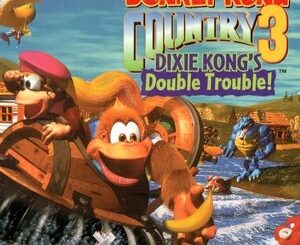
Donkey Kong Country 3: Dixie Kong’s Double Trouble!, developed by Rare and published by Nintendo, arrived on the Super Nintendo Entertainment System (SNES) in 1996. As the final installment in the revered 16-bit trilogy, DKC3 […]
Donkey Kong Country Returns, developed by Retro Studios and published by Nintendo, marked a triumphant return for the beloved ape duo on the Nintendo Wii in 2010. After a long hiatus, this 2D platformer revitalized […]