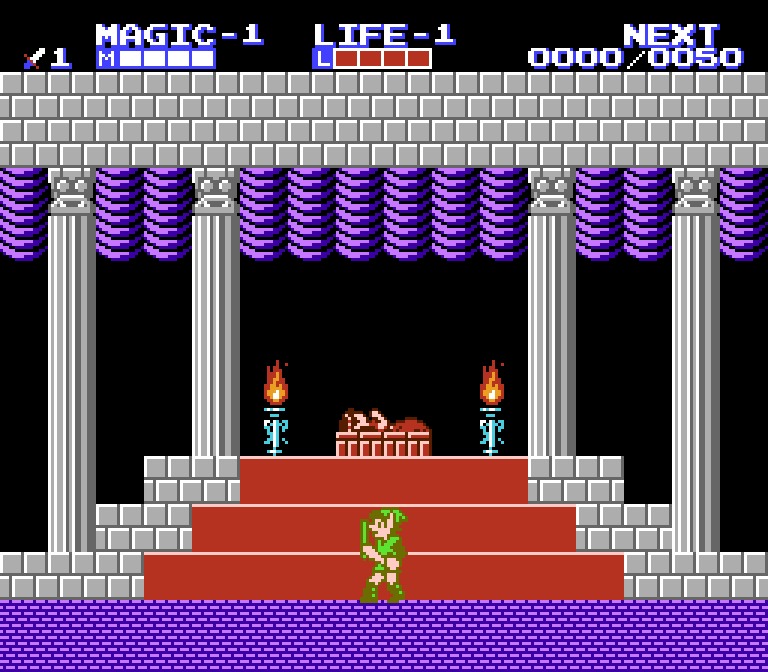
Zelda II: The Adventure of Link, developed and published by Nintendo, arrived on the Nintendo Entertainment System (NES) in 1987 (Japan) and 1988 (North America). As the direct sequel to the groundbreaking original, Zelda II NES took a radical departure from its predecessor, introducing side-scrolling combat, RPG elements, and a challenging difficulty that made it a unique, and often divisive, entry in the beloved Zelda series. This Zelda II NES review explores its bold innovations and enduring legacy.
Gameplay: Side-Scrolling Action and RPG Depth
The most striking change in Zelda II is its shift in perspective. While the overworld map retains the top-down view, encounters and dungeons transition to a side-scrolling perspective, reminiscent of traditional platformers. Link can jump, duck, and perform precise sword thrusts (upward and downward), adding a new layer of skill to combat.
Crucially, Zelda II introduced significant RPG elements. Link gains experience points from defeating enemies, which can be allocated to increase his Attack, Magic, and Life stats. A new magic system allows Link to cast spells for healing, utility, and offensive purposes, adding strategic depth. The game is notoriously challenging, with unforgiving enemies, tricky platforming, and a finite number of lives, making every step a perilous journey. The infamous Dark Link boss fight is a particular highlight, testing players’ combat mastery.
Unique side-scrolling combat and platforming
RPG elements: experience points and stat upgrades
New magic system with various spells
High, often unforgiving, difficulty
Iconic boss battles, including Dark Link
Story and Setting: Awakening the Princess
The narrative of Zelda II sees Link embarking on a quest to awaken a sleeping Princess Zelda, who was cursed by a wizard. To do so, he must find the Triforce of Courage and defeat the resurrected Ganon’s minions, who seek to spill Link’s blood to revive their master. The story is more direct than the original, focusing on Link’s personal journey across the vast and dangerous land of Hyrule.
The world is filled with towns, caves, and palaces, encouraging exploration and interaction with NPCs who often provide cryptic clues or vital items.
Graphics and Sound: 8-bit Charm with a New Look
Visually, Zelda II on the NES features a blend of the top-down overworld (similar to the first game) and detailed side-scrolling sprites for combat and dungeon exploration. Link’s sprite is larger and more expressive, and enemy designs are varied and often intimidating. The 8-bit graphics create a distinct atmosphere that, while different from its predecessor, is still charming.
The soundtrack, composed by Akito Nakatsuka, is iconic and memorable. While it retains some of the adventurous spirit of the original, it introduces new, darker, and more intense themes that perfectly complement the game’s challenging nature. Tracks like the “Palace Theme” are instantly recognizable.
Legacy: A Divisive but Influential Experiment
Zelda II: The Adventure of Link remains the most divisive main entry in the Zelda series due to its radical departure from the established formula. Many fans were alienated by its difficulty and genre shift. However, it also introduced elements that would become staples or reappear in later games, such as the magic meter, the concept of a “Dark Link,” and a greater emphasis on narrative. It’s recognized as a bold experiment that pushed the boundaries of what a Zelda game could be.
Is Zelda II: The Adventure of Link on NES Worth Playing Today?
For retro gaming enthusiasts and Zelda fans curious about the series’ evolution, Zelda II on NES is absolutely worth playing today. Be prepared for a significant challenge and a different kind of Zelda experience. Its unique blend of action RPG and side-scrolling platforming, combined with its iconic soundtrack, makes it a fascinating and rewarding classic NES game that stands as a testament to Nintendo’s willingness to innovate.
The Legend of Zelda: Breath of the Wild, released in 2017 for the Nintendo Switch, is a groundbreaking open-world action-adventure game that redefined the Zelda series and the genre itself. Directed by Eiji Aonuma, this […]
The Legend of Zelda: Echoes of Wisdom, released in 2024 for the Nintendo Switch, marks a significant entry in the Zelda series. Directed by Hidemaro Fujibayashi, this game shifts the focus to Princess Zelda as […]