
Games
Mortal Kombat: Armageddon Review
Review Ratings
Final Review Score
Great
Directed by co-creator Ed Boon, Mortal Kombat: Armageddon (2006) served as the grand finale for the sixth generation of consoles on PlayStation 2 and Xbox (with a Wii release in 2007). Serving as the culmination of the franchise’s 3D era, Midway set out with an ambitious goal: bringing together every single playable warrior from the previous fourteen years of history into a singular, colossal battle. In this detailed Mortal Kombat: Armageddon game review, we examine how an unprecedented 60+ character roster, deep creation modes, action-adventure storytelling, and kart-racing minigames delivered an explosive celebration of the series.
The Pyramid of Argus, Taven’s Quest, and Apocalyptic Chaos
The lore addresses a cataclysmic problem: the overwhelming power of the universe’s kombatants has grown so vast that their battles threaten to tear the realms apart. To prevent total annihilation, Edenian god Argus and sorceress Delia created a safeguards plan—awakening their sons, Taven and Daegon, to compete in a quest that culminates atop the massive Pyramid of Argus in Edenia. There, every single warrior in franchise history gathers for an epic battle royale to defeat the fire elemental Blaze and claim godlike power. The beat-’em-up Konquest mode puts players in control of Taven as he uncovers family betrayals, confronts classic heroes and villains, and journeys toward the apocalyptic final clash.
62-Fighter Roster, Kreate-A-Fighter, and Custom Fatalities
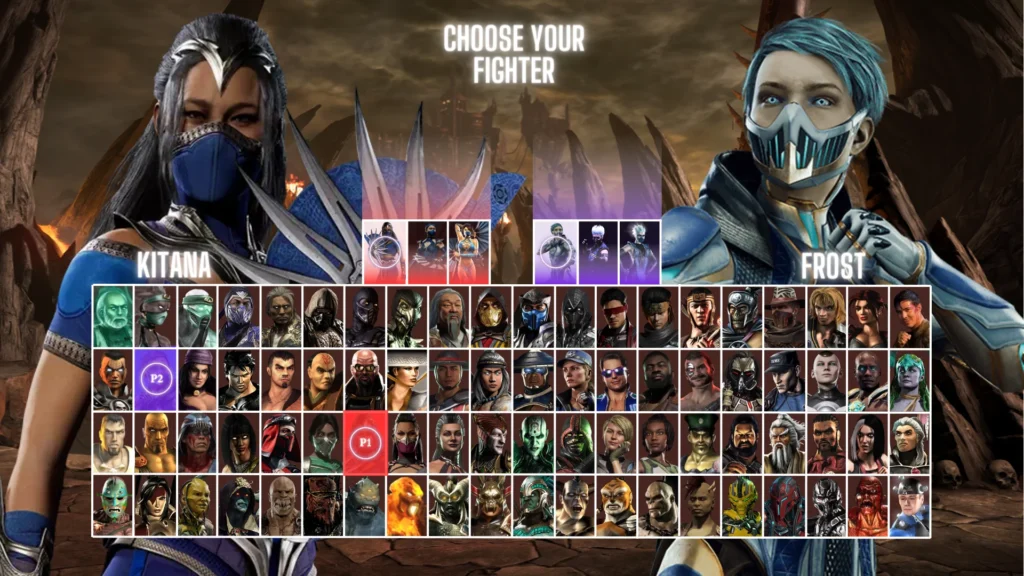
The headline feature of Armageddon is its incredible 62-character roster, featuring iconic ninja rivals, obscure spin-off characters, and massive bosses alike. Combat streamlined stance-switching down to two distinct styles per character (one hand-to-hand and one weapon), introducing aerial combat juggles into the mix. The game broke ground with a deep Kreate-A-Fighter mode, allowing players to design custom warriors with tailored visual aesthetics, move sets, and fighting stances. Additionally, the new “Kreate-A-Fatality” system allowed players to dynamically string together custom limb rips, torso snaps, and decapitation inputs.
Motor Kombat, The Catacomb Krypt, and High-Energy Audio
Beyond traditional fighting, Midway expanded side content with Motor Kombat, a fun, super-deformed mascot kart-racing mode complete with character-specific special abilities, track hazards, and instant-death pit traps. The Krypt returned in a catacomb layout, filled with concept art, arena unlocks, and soundtrack media. Rich Carle and Chase Ashbaker delivered a driving, high-octane orchestral score that captured the sheer scale of the end-times battlefield.
The Final Verdict
Ultimately, this Mortal Kombat: Armageddon review celebrates a wildly ambitious, feature-stuffed, and nostalgic tribute to the franchise’s history. Driven by Ed Boon’s vision, an all-inclusive roster, extensive player customization, and chaotic mini-games, it remains a beloved peak of casual multiplayer fun and a fitting conclusion to an era.
Information
- Title: Mortal Kombat: Armageddon
- Release Date: October 9, 2006
- Developers: Midway Games
- Key Characters: Taven, Daegon, Blaze, Shao Kahn, Raiden, Scorpion, Sub-Zero, Quan Chi, Shang Tsung
- Genre: 3D Fighting, Action-Adventure
This post is part of Mortal Kombat Games Ranked