
Games
SimCity 4: Rush Hour Review
Review Ratings
Final Review Score
Amazing
Developed by Maxis and published by EA Games, SimCity 4: Rush Hour (2003) stands as one of the most vital expansion packs in simulation history. Addressing the steep difficulty curve and strict traffic congestion bottlenecks of the original base game, Rush Hour transformed municipal management by putting transit infrastructure directly at the heart of city planning. In this detailed SimCity 4: Rush Hour game review, we explore how expanded transit networks, hands-on driving missions, essential query diagnostic tools, and architectural architectural additions perfected Will Wright’s flagship PC franchise.
Transit Network Overhaul, Route Diagnostics, and Mass Transit
The core focus of Rush Hour revolves around untangling urban gridlock through an impressive array of new infrastructure options. Maxis introduced one-way streets, multi-lane avenues, ground-level highways, toll booths, ferry systems, and high-speed monorails to support massive commuter volumes. The single most transformative feature is the revolutionary Route Query tool, which allows mayors to click on any road tile or building to see exact color-coded commuter transit paths. This diagnostic clarity eliminated guesswork, letting players build strategic park-and-ride garages, bus hubs, and subway connections right where commuters needed them.
U-Drive-It Missions, Architectural Sets, and Disasters
Beyond macro-city management, the expansion introduced the hands-on U-Drive-It mode. Players can take direct control of cars, police cruisers, fire trucks, helicopters, ferry boats, and trains to navigate city streets in third-person view. Completing timed emergency scenario missions or delivery objectives awards extra mayor rating points, cash infusions, or exclusive unlockable reward buildings. The expansion also introduced distinct regional architecture styles—including Chicago 1890, New York 1940, Houston 1990, and European Contemporary—alongside wild disasters like “Autosaurus Wrecks” and alien invasions.
Visual Polish, Performance Engine, and Jerry Martin’s Score
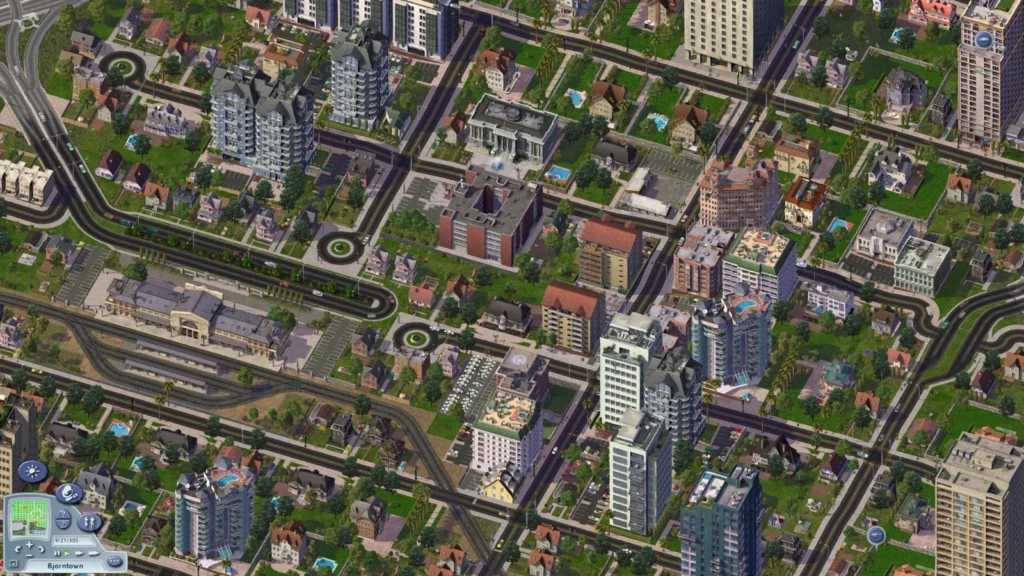
Visually, Rush Hour enhanced the isometric rendering engine with higher density traffic simulations, realistic intersection signals, and distinct building styles. Composer Jerry Martin delivered an iconic jazz, electronic, and lounge ambient soundtrack that matched the rhythmic pulse of a thriving metropolis, paired with crunching transit sounds and urban ambient audio.
The Final Verdict
Ultimately, this SimCity 4: Rush Hour review celebrates an indispensable expansion that elevated an already great simulation into an absolute masterpiece. Driven by Maxis’ brilliant Route Query system, expanded transit options, engaging U-Drive-It gameplay, and deep city-building mechanics, it remains the gold standard for city-building PC simulations.
Information
- Title: SimCity 4: Rush Hour
- Release Date: September 22, 2003
- Developers: Maxis, EA Games
- Platforms: PC (Windows), Mac OS X
- Genre: City-Building, Urban Simulation, Strategy
This post is part of SimCity Games Ranked