
Games
SimCity 2000 Review
Review Ratings
Final Review Score
Great
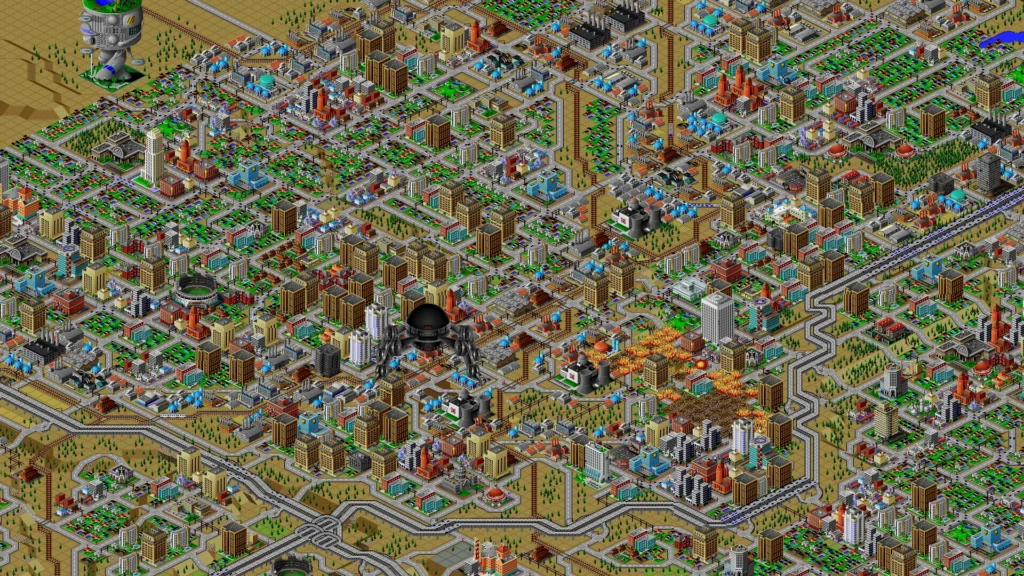
Designed by Will Wright and Fred Haslam, SimCity 2000 (1993) redefined the urban simulation genre and solidified Maxis as a powerhouse in gaming. Building upon the 2D top-down foundation of the 1989 original, this sequel introduced a revolutionary dimetric isometric perspective, customizable terrain elevation, and layer-based municipal infrastructure. In this detailed SimCity 2000 game review, we explore how water delivery pipes, subterranean subway lines, futuristic Arcologies, and dynamic news reports crafted a PC gaming classic.
Elevated Terrain, Underground Utilities, and Arcologies
In SimCity 2000, player-mayors gain unprecedented control over city geometry. Before laying down a single road, players can reshape hills, carve rivers, and sculpt mountain ranges. Zoning expands beyond basic low/high density residential, commercial, and industrial plots to require complex infrastructure networks. Mayors must manage underground water pipe grids connected to pumps, water towers, and treatment plants while balancing power lines, bus depots, subways, seaports, and airports. Reaching high population milestones unlocks sci-fi Arcologies—futuristic self-contained mega-structures like Plymouth Acos and Launch Arcos capable of housing tens of thousands of citizens in a single city block.
Municipal Finance, Newspaper Feedback, and Disasters
The economic engine requires thoughtful fiscal management. Players adjust property tax rates, enact city ordinances (such as recycling programs or public transit subsidies), and issue municipal bonds to fund construction. City feedback is delivered dynamically through customizable local newspapers like the SimCity Times, offering humorous op-eds, citizen complaints, and financial updates. When disaster strikes—whether monster attacks, alien invasions, tornadoes, or fires—mayors dispatch police and fire units in real time to contain the chaos.
Isometric Visual Detail and Sound Design
The shift to a detailed 3D-style isometric view brought cities to life with distinct building architecture, dynamic traffic patterns, and visible construction stages. Player actions are accompanied by memorable audio cues, click effects, and MIDI music tracks composed by Sue Kasper, Brian Conrad, and Justin McCormick that shift seamlessly between relaxed jazz and driving urban themes.
The Final Verdict
Ultimately, this SimCity 2000 review celebrates an absolute masterpiece of game design. Driven by Will Wright’s vision, deep municipal simulation layers, charm, and endless creative freedom, it remains one of the most influential strategy titles ever made.
Information
- Title: SimCity 2000
- Release Date: November 1993
- Developers: Maxis, Electronic Arts
- Platforms: MS-DOS, Mac OS, Windows, SNES, PlayStation, Sega Saturn
- Genre: City-Building, Urban Simulation, Strategy
This post is part of SimCity Games Ranked