
Film
VisionQuest Review
Review Ratings
Final Review Score
Amazing
Released on Disney+, VisionQuest (2026), showrun by Terry Matalas (Star Trek: Picard), serves as the long-awaited third chapter in the emotional trilogy that began with WandaVision and continued in Agatha All Along. Re-centering the Marvel Cinematic Universe on high-concept sci-fi, introspective character studies, and cybernetic philosophy, the series examines White Vision’s quest to reclaim his humanity after regaining his memories without their emotional weight. In this comprehensive VisionQuest TV review, we explore how sharp writing, stunning visual effects, and a dynamic reunion between Vision and Ultron create a standout entry in Phase Six.
A Journey into Mindspace, Lost Sons, and Returning Foes
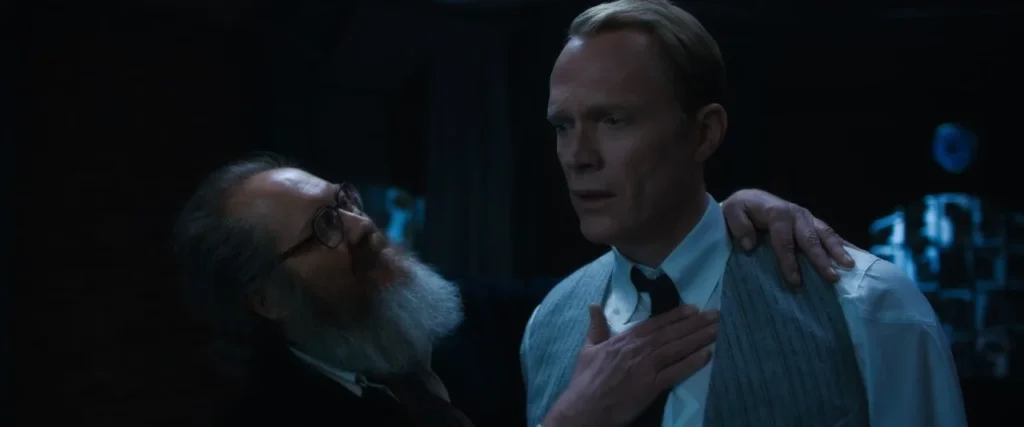
Following his departure at the end of WandaVision, White Vision (Paul Bettany) lives a quiet existence under an assumed name while attempting to connect with his restored memories. To resolve his identity crisis, Vision retreats into an internal virtual construct known as Mindspace, where lingering AI personas manifest as human avatars. His quest takes a dramatic turn when he crosses paths with Tommy Shepherd (Ruaridh Mollica), a troubled young man wrestling with fragments of memories from his past life as Vision and Wanda’s son. However, deep within Vision’s code lies the dormant, uploaded consciousness of his creator and dark mirror, Ultron (James Spader), initiating a complex dynamic between father, son, and creator.
Surreal Virtual Aesthetics, Slick Action, and Electronic Scoring
Terry Matalas crafts a visual identity that seamlessly blends grounded European locations with abstract visual art. The Mindspace sequences offer breathtaking surrealism, presenting digital mental spaces as loft apartments, cybernetic labyrinths, and monochrome voids. Action set pieces carry weight and technical precision, balancing high-speed AI confrontations with tense subterranean chases. Complementing the narrative is a sophisticated electronic and orchestral score that weaves synthesized motifs from Avengers: Age of Ultron and WandaVision into a fresh, cerebral soundscape.
Electrifying Lead Dynamics and Standout Character Work
Paul Bettany delivers a nuanced, tragic performance as Vision, portraying the stark isolation of an artificial being seeking an emotional soul. James Spader makes a triumphant return as Ultron, bringing theatrical malice, dry wit, and surprising philosophical depth to an AI who has spent years analyzing human nature from inside Vision’s mind. Ruaridh Mollica brings raw vulnerability to Tommy Shepherd, while an excellent supporting cast—including Todd Stashwick and returning MCU veterans—enriches the world with narrative complexity.
The Final Verdict
Ultimately, this VisionQuest review celebrates a cerebral, visually striking, and emotionally resonant television milestone. Driven by Terry Matalas’ assured showrunning, Paul Bettany and James Spader’s extraordinary dynamic, and deep philosophical themes, it stands as one of Marvel’s most mature and inventive series.
Information
- Title: VisionQuest
- Release Date: October 13, 2026
- Director: Christopher J. Byrne, Gandja Monteiro, Vincenzo Natali, Terry Matalas
- Stars: Paul Bettany, James Spader, Ruaridh Mollica, Todd Stashwick, Emily Hampshire, T’Nia Miller
- Genre: Sci-Fi, Adventure, Action
This post is part of Marvel TV Shows Ranked