Mega Man 4, developed and published by Capcom, arrived on the Nintendo Entertainment System (NES) in 1991. As the fourth installment in the beloved 8-bit series, Mega Man 4 NES continued the tradition of challenging platforming and ingenious boss fights, while also introducing a pivotal new mechanic that would become a series staple. This Mega Man 4 review explores its innovations and why it remains a solid entry for fans.
Gameplay: The Mighty Mega Buster and New Adaptors
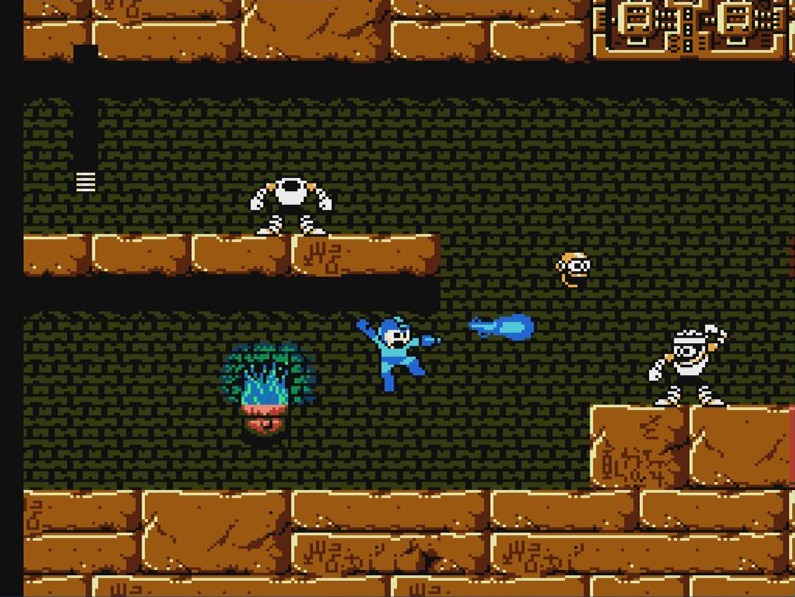
At its core, Mega Man 4 on NES adheres to the established formula: choose from eight initial Robot Master stages, each culminating in a unique boss fight that rewards Mega Man with a new weapon. The levels are intricately designed, filled with unique enemies, environmental hazards, and requiring precise platforming and strategic use of acquired weapons.
The game’s most significant addition is the “Mega Buster” Charge Shot. By holding down the attack button, Mega Man can unleash a powerful, charged blast that deals increased damage. This transformed combat, allowing players to conserve energy for powerful attacks and adding a new layer of tactical depth. The game also introduces two new support items: the Wire Adaptor (a grappling hook for vertical traversal) and the Balloon Adaptor (to create temporary platforms). These new abilities provide more options for navigating levels and discovering hidden secrets. The roster of Robot Masters is memorable, including Pharaoh Man, Toad Man, Bright Man, and Ring Man, each with distinct attack patterns and weaknesses that encourage experimentation. The challenge is classic Mega Man, demanding skill and pattern recognition, with E-Tanks and the rare M-Tank available for emergencies.
Introduction of the iconic Mega Buster Charge Shot
Eight challenging and creatively designed Robot Master stages
New utility items: Wire Adaptor and Balloon Adaptor
Precise platforming and classic Mega Man challenge
Memorable boss fights requiring strategic weapon use
Story and Setting: A New Villain and Wily’s Return
The narrative of Mega Man 4 introduces a new antagonist, Dr. Cossack, who unleashes eight new Robot Masters. However, as is often the case in the series, the true mastermind, Dr. Wily, eventually reveals himself.
The game takes players through a variety of visually distinct and creatively themed stages, from ancient ruins to icy caverns and high-tech factories, culminating in Cossack’s Citadel and Wily’s Fortress. The settings are vibrant and well-designed for the NES hardware.
Graphics and Sound: 8-bit Excellence and Catchy Tunes
Visually, Mega Man 4 on the NES is a strong example of 8-bit prowess. The graphics are colorful, clean, and well-animated, with clear character sprites and detailed backgrounds that bring each unique stage to life. The special effects for Mega Man’s new abilities and boss attacks are particularly impressive for the system.
The sound design is fantastic. The game features another set of highly energetic and memorable iconic soundtrack tunes, with each Robot Master stage boasting its own catchy melody. The classic Mega Man sound effects for shooting, jumping, and taking damage are all present and perfectly replicated, contributing to the game’s recognizable charm.
Legacy: A Key Evolution in the Series
Mega Man 4 is significant for introducing the Charge Shot, a mechanic that fundamentally changed how players approached combat and became a staple for all future Mega Man titles. While perhaps not as universally praised as *Mega Man 2* or *3*, it’s a solid, enjoyable entry that showcased Capcom’s continued mastery of the NES hardware.
Is Mega Man 4 on NES Worth Playing Today?
Absolutely. For retro gaming enthusiasts, Mega Man fans, or anyone looking for a challenging and rewarding 8-bit platformer, Mega Man 4 NES is a must-play. Its innovative Charge Shot, well-designed levels, and memorable boss fights offer an endlessly enjoyable and rewarding experience. It’s a true classic NES game that holds its own in a legendary series.
Mega Man, released in 1987 for the Nintendo Entertainment System (NES), introduced the world to the iconic Blue Bomber and a challenging new style of action-platformer. Developed by Capcom, this game laid the foundation for […]
Mega Man 2, developed and published by Capcom, is a seminal action platformer released for the Nintendo Entertainment System (NES) in 1988. Widely regarded as one of the greatest video games of all time, Mega […]
Mega Man 3, developed and published by Capcom, landed on the Nintendo Entertainment System (NES) in 1990, building upon the already stellar foundation of its predecessors. This 8-bit 2D platformer is often hailed as one […]