
Games
Mortal Kombat vs. DC Universe Review
Review Ratings
Final Review Score
Great
Directed by creative mastermind Ed Boon, Mortal Kombat vs. DC Universe (2008) marked a monumental turning point for Midway Games and the future of NetherRealm Studios. Bridging the gap between gritty martial arts gore and iconic comic book superheroes, this eighth main installment transitioned the series into full HD graphics while pioneering story-driven fighting campaigns. In this detailed Mortal Kombat vs. DC Universe game review, we examine how cross-realm story mechanics, interactive stage transitions, and iconic roster clashes reshaped modern fighting games.
Merging Realms, Dark Kahn, and the Collision of Legends
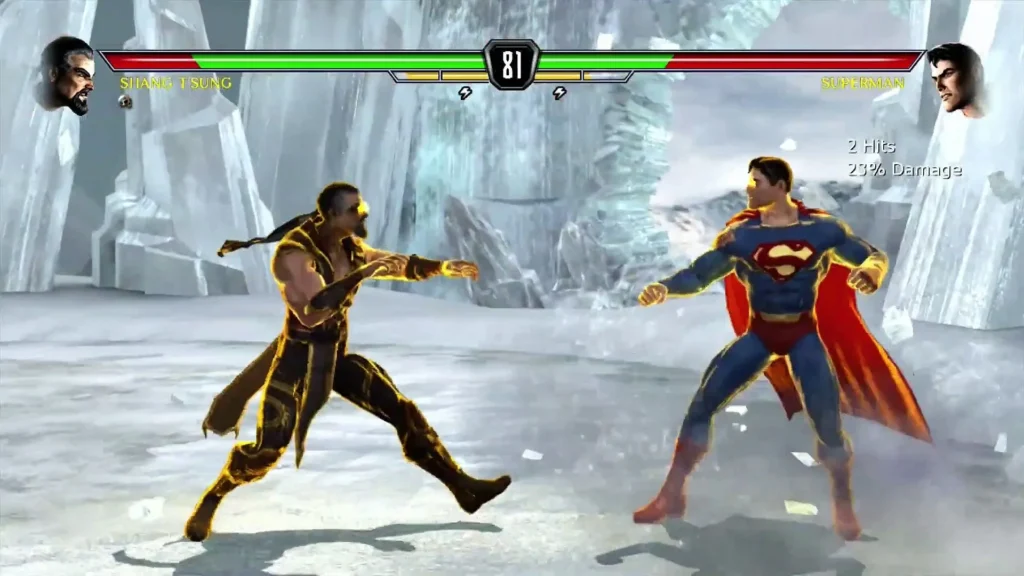
The story kicks off when simultaneous dimensional disruptions in Earthrealm and Metropolis cause Outworld warlord Shao Kahn and cosmic tyrant Darkseid to merge into an unstable entity known as Dark Kahn. As a result, the Mortal Kombat and DC Comics universes begin merging, causing characters from both worlds to suffer from unexplainable violent “rage” spikes that force allies and enemies alike into conflict. The roster features 22 playable fighters, pitting legends like Scorpion, Sub-Zero, Raiden, and Shang Tsung directly against Batman, Superman, Wonder Woman, and The Joker. To accommodate the PG-13 rating required for DC characters, classic Fatalities were paired alongside non-lethal “Heroic Brutalities” for justice-minded heroes.
Klose Kombat, Free-Fall Transitions, and Unreal Engine Presentation
Gameplay introduced fresh cinematic combat mechanics designed to take advantage of 3D-arena physics. “Free-Fall Kombat” allowed players to battle mid-air while plunging through multi-tiered stages, while “Klose Kombat” shifted the camera in tight for brutal close-quarters grapple exchanges. The game was built using Unreal Engine 3, introducing dynamic real-time body damage where clothes tore and faces bruised as rounds progressed. Composer Crispyn Hands delivered a grand orchestral score that blended dark fighting synth motifs with heroic symphonic themes.
Cinematic Campaign Foundation and NetherRealm’s Future
The game’s dual-perspective story mode—allowing players to play through complete narrative chapters from either the MK or DC perspective—laid the direct blueprint for NetherRealm Studios’ critically acclaimed future titles, including Mortal Kombat (2011) and the Injustice series. Seeing Batman throw down with Sub-Zero or Superman clash with Raiden brought pure fan-service excitement to fighting game enthusiasts worldwide.
The Final Verdict
Ultimately, this Mortal Kombat vs. DC Universe review celebrates a bold, innovative, and historical crossover chapter. Driven by Ed Boon’s vision, memorable cinematic storytelling, and unique interactive fighting mechanics, it remains a pivotal title in fighting game history.
Information
- Title: Mortal Kombat vs. DC Universe
- Release Date: November 16, 2008
- Developers: Midway Games, Warner Bros. Interactive Entertainment
- Key Characters: Scorpion, Sub-Zero, Raiden, Liu Kang, Batman, Superman, Joker, Wonder Woman, Dark Kahn
- Genre: Fighting, Action
This post is part of Mortal Kombat Games Ranked