
Movies
Finding Dory Review
Review Ratings
Final Review Score
Great
Directed by Andrew Stanton (Finding Nemo, WALL-E) and co-directed by Angus MacLane, Finding Dory (2016) arrived thirteen years after its beloved predecessor, expanding one of Pixar Animation Studios’ most cherished aquatic worlds. Centering the narrative on a side character with short-term memory loss, the film succeeded by transforming a comedic relief trait into a poignant exploration of neurodivergence, disability, and family perseverance. In this detailed Finding Dory movie review, we examine how Ellen DeGeneres, Albert Brooks, Ed O’Neill’s octopus animation marvel, and Thomas Newman’s score created a record-breaking box-office hit.
Jewel of Morro Bay, Hank the Septopus, and the Shell Trail Journey
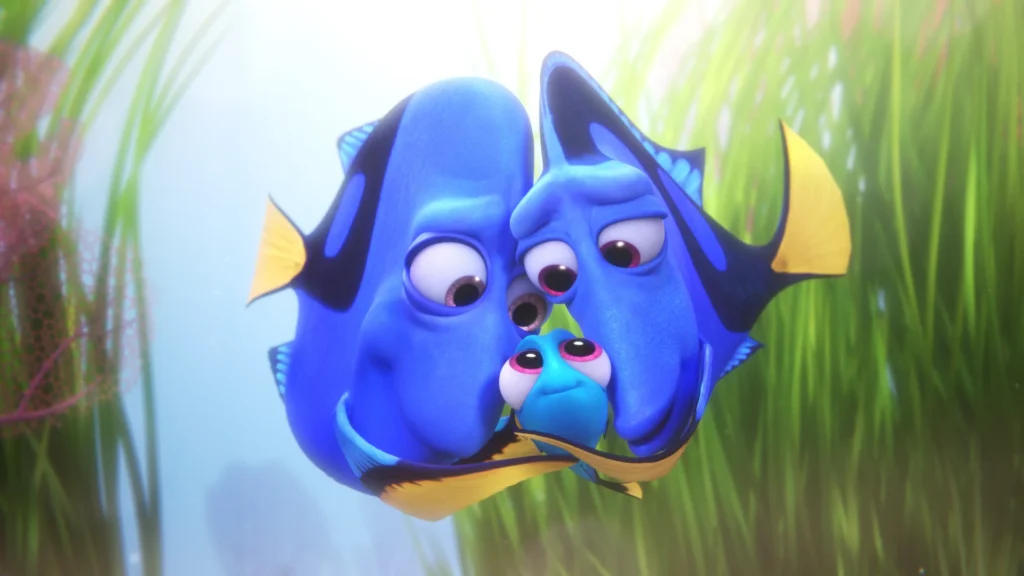
Set one year after the events of Finding Nemo, the story begins when Dory (voiced by Ellen DeGeneres) experiences sudden memory flashes of her long-lost parents, Charlie and Jenny (voiced by Eugene Levy and Diane Keaton). Accompanied across the ocean by Marlin (voiced by Albert Brooks) and Nemo (voiced by Hayden Rolence), Dory arrives at the Marine Life Institute in California—”The Jewel of Morro Bay.” Separated from her companions inside the quarantine facility, Dory allies with Hank (voiced by Ed O’Neill), a cynical, camouflage-capable seven-tentacled octopus (a “septopus”) who seeks Dory’s plastic transport tag to escape to a quiet sanctuary in Cleveland. Together with whale shark Destiny (voiced by Kaitlin Olson) and beluga whale Bailey (voiced by Ty Burrell), Dory maneuvers through touch tanks, pipes, and exhibits to uncover the truth about her past.
Ellen DeGeneres’ Vocal Heart, Breakout Supporting Cast, and Themes of Adaptation
Ellen DeGeneres delivers an emotional, layered vocal performance, balancing Dory’s trademark optimism with profound vulnerability and anxiety when faced with disorientation. Albert Brooks grounds the film with sharp comedic exasperation as Marlin learns to trust Dory’s unconventional problem-solving methods. Ed O’Neill‘s Hank stands out as a technical and comedic triumph, serving as a reluctant, grumpy protector. The script shines in its empathetic framing of memory impairment and physical limitations, recasting “What would Dory do?” as a lesson in instinct and self-acceptance.
Water Rendering Breakthroughs, Camouflage CGI, and Thomas Newman’s Score
Pixar made massive technological strides between 2003 and 2016, utilizing a completely updated rendering engine (RenderMan RIS) that realistically computed complex underwater caustics, light refraction, and murky aquarium glass depth. Animating Hank required two years of development alone, engineering physics-driven muscle flexes and dynamic skin texture camouflage that seamlessly blended into tile floors, plastic plants, and glass tanks. Composer Thomas Newman returned with a lush, atmospheric score blending delicate piano melodies with expansive orchestral arrangements that mirrored the vast beauty of the Pacific Coast.
The Final Verdict
Ultimately, this Finding Dory review celebrates a delightful, touching, and technically brilliant sequel. Driven by Andrew Stanton’s seasoned direction, memorable vocal work from Ellen DeGeneres and Ed O’Neill, groundbreaking aquatic animation, and a warm message about unconditional love and adaptability, it stands as a worthy follow-up to a classic.
Information
- Title: Finding Dory
- Release Date: June 17, 2016
- Director: Andrew Stanton, Angus MacLane (Co-Director)
- Key Cast: Ellen DeGeneres, Albert Brooks, Ed O’Neill, Kaitlin Olson, Ty Burrell, Diane Keaton, Eugene Levy, Hayden Rolence, Idris Elba, Dominic West
- Genre: Animation, Adventure, Comedy, Family
This post is part of Pixar Movies Ranked