
Movies
Finding Nemo Review
Review Ratings
Final Review Score
Amazing
Written and directed by Andrew Stanton and co-directed by Lee Unkrich, Finding Nemo (2003) stands as one of Pixar Animation Studios’ most financially successful and critically adored achievements. Captivating global audiences with its unprecedented aquatic visual fidelity, the film balanced grand oceanic peril with a poignant, universal father-son emotional core. In this detailed Finding Nemo movie review, we explore how Albert Brooks, Ellen DeGeneres, revolutionary underwater lighting algorithms, and brilliant character design created an enduring cinematic treasure.
The Great Barrier Reef, Sydney Harbor, and the Tank Gang
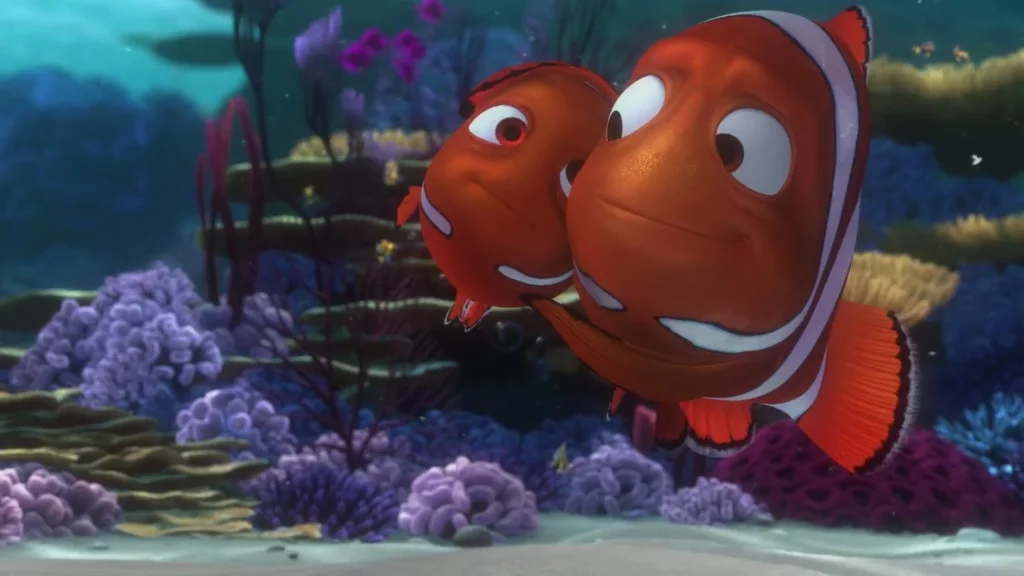
Following a traumatic barracuda attack that leaves him a overly protective single father, clownfish Marlin (voiced by Albert Brooks) shelters his son, Nemo (voiced by Alexander Gould), born with a undersized “lucky fin.” On his first day of school, a defiant Nemo swims out into open water and is captured by a scuba-diving dentist from Sydney, Australia. Desperate to rescue his son, Marlin embarks on an arduous trek across the Pacific, teaming up with Dory (voiced by Ellen DeGeneres), a regal blue tang suffering from short-term memory loss. Meanwhile, Nemo is placed in a dentist’s office fish tank, where he joins the “Tank Gang”—led by a battle-scarred Moorish idol named Gill (voiced by Willem Dafoe)—to execute a daring escape back to the ocean.
Vocal Magic, Parenting Themes, and Character Synergy
The vocal chemistry between Albert Brooks and Ellen DeGeneres gives the film its heart and comedic brilliance. Brooks imbues Marlin with neurotic panic, fierce love, and relatable vulnerability, while DeGeneres delivers a scene-stealing, career-defining performance as Dory, seamlessly shifting between joyous innocence and tragic emotional clarity. Supporting vocal work—including Willem Dafoe’s stern Gill, Allison Janney’s Starfish Peach, and director Andrew Stanton as the laid-back sea turtle Crush—adds endless charm to the ocean’s diverse ecosystem.
Pioneering Ocean Rendering and Thomas Newman’s Atmospheric Score
Pixar achieved monumental technical milestones in rendering realistic underwater environments, developing custom shaders for volumetric lighting, caustic water reflections, floating particulate matter, and translucent coral reefs. Action set pieces—including a nerve-wracking escape from Bruce the vegetarian Great White Shark, a jellyfish field navigation, and a East Australian Current sea turtle ride—showcase stunning visual scale. Composer Thomas Newman supplied a haunting, ambient orchestral score featuring delicate piano themes and watery percussion that mirrored the ocean’s vast mystery.
The Final Verdict
Ultimately, this Finding Nemo review celebrates a timeless triumph of animated storytelling. Driven by Andrew Stanton’s visionary direction, extraordinary performances from Albert Brooks and Ellen DeGeneres, groundbreaking aquatic CGI, and a deeply moving core message about letting go, it remains an undisputed classic of cinema.
Information
- Title: Finding Nemo
- Release Date: May 30, 2003
- Director: Andrew Stanton
- Key Cast: Albert Brooks, Ellen DeGeneres, Alexander Gould, Willem Dafoe, Allison Janney, Geoffrey Rush, Elizabeth Perkins
- Genre: Animation, Adventure, Comedy, Family
This post is part of Pixar Movies Ranked