
Movies
Freddy’s Dead: The Final Nightmare Review
Review Ratings
Final Review Score
Great
Directed by Rachel Talalay from a screenplay by Michael De Luca, Freddy’s Dead: The Final Nightmare (1991) pitched itself as the definitive theatrical conclusion to New Line Cinema’s original flagship series. Fully embracing dark pop-art comedy, cartoonish death sequences, and a climax delivered in “Freddy Vision” 3D, the sixth chapter explored Freddy Krueger’s backstory in unprecedented detail. In this detailed Freddy’s Dead: The Final Nightmare movie review, we examine how comedic absurdity, origin mythos, and memorable celebrity cameos produced an entertaining 1990s pop-culture spectacle.
Desolate Springwood, Hidden Lineages, and the Dream Demons
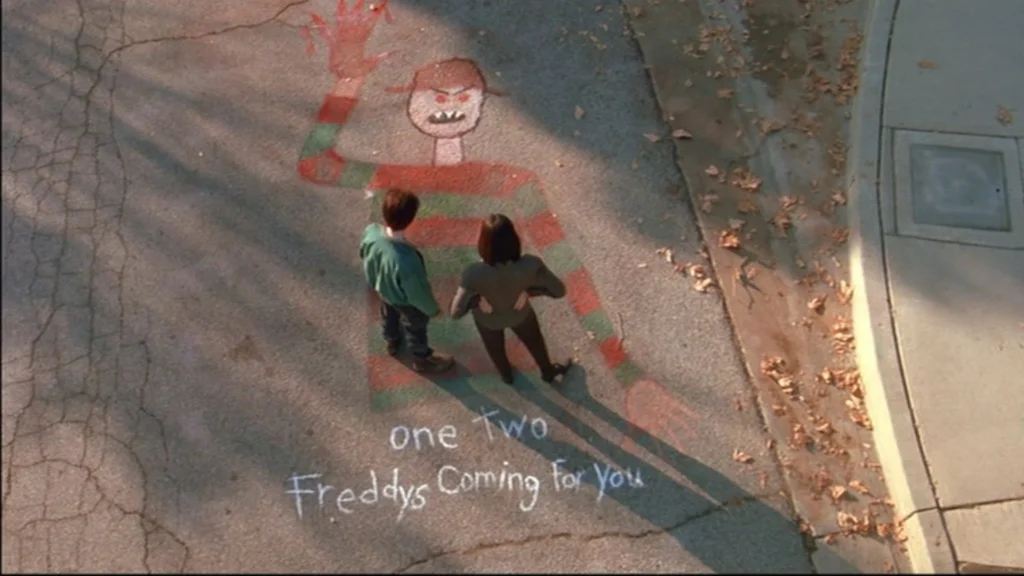
Set ten years into a dystopian future where Freddy Krueger (Robert Englund) has systematically wiped out every child and teenager in Springwood, Ohio, the town sits in a state of collective madness. The lone surviving teenager, an amnesiac youth known only as John Doe (Shon Greenblatt), escapes the town boundaries and ends up at a shelter for troubled youth in a nearby city. Child psychologist Dr. Maggie Burroughs (Lisa Zane) takes an interest in John’s case, discovering newspaper clippings that suggest Freddy had a child. Maggie, John, and three runaway shelter teens—Tracy, Carlos, and Spencer—travel back to the surreal ghost town of Springwood to uncover the killer’s roots. As Freddy uses video games, hearing aids, and dream traps to eliminate the teens, Maggie learns shocking secrets regarding her own past and the ancient “Dream Demons” that granted Krueger his immortal powers.
3D Gimmicks, Video Game Parodies, and Brian May’s Dynamic Score
Director Rachel Talalay brings a colorful, comic-book visual approach to the production, replacing classic gothic dread with slapstick humor and pop-culture visual gags. The film’s final act features a theatrical 3D sequence where characters don specialized glasses to enter Freddy’s mind, resulting in fun interactive visual tricks. Rock composer Brian May (formerly of the band Queen) delivers a high-energy orchestral and electric guitar score, complementing comedic cameos from Alice Cooper, Roseanne Barr, Tom Arnold, and Johnny Depp.
Robert Englund’s Camp Performance and Lisa Zane’s Central Heroine
Robert Englund leans completely into dark comedy, turning in his most theatrical and self-aware performance as Freddy Krueger while showcasing key flashback moments of his human past. Lisa Zane provides strong dramatic grounding as Dr. Maggie Burroughs, bringing personal conviction to her final confrontation with her monstrous father figure. Lezlie Deane shines as the tough-as-nails Tracy, providing strong physical action support throughout the film’s climactic battle.
The Final Verdict
Ultimately, this Freddy’s Dead: The Final Nightmare review celebrates a wildly campy, creative, and memorable 1990s horror farewell. Driven by Rachel Talalay’s inventive direction, deep dives into franchise lore, energetic 3D set pieces, and Robert Englund’s uninhibited charisma, it stands as a unique pop-horror chapter in the series.
Information
- Title: Freddy’s Dead: The Final Nightmare
- Release Date: September 13, 1991
- Director: Rachel Talalay
- Stars: Robert Englund, Lisa Zane, Shon Greenblatt, Lezlie Deane, Ricky Dean Logan, Yaphet Kotto
- Genre: Horror, Comedy, Fantasy
This post is part of A Nightmare on Elm Street Movies Ranked