
Movies
Halloween: Resurrection Review
Review Ratings
Final Review Score
Decent
Released in 2002, Halloween: Resurrection, directed by returning franchise veteran Rick Rosenthal (Halloween II), attempted to modernize the iconic slasher formula for the turn-of-the-century internet era. Capitalizing on the rise of webcams and reality television broadcasts, the film sent a group of college students armed with headset cameras into the childhood home of Michael Myers. In this detailed Halloween: Resurrection movie review, we examine how early Y2K tech aesthetics, martial arts face-offs, and campy entertainment created a unique, time-capsule entry in the horror saga.
A Final Asylum Confrontation and the Dangertainment Webcast
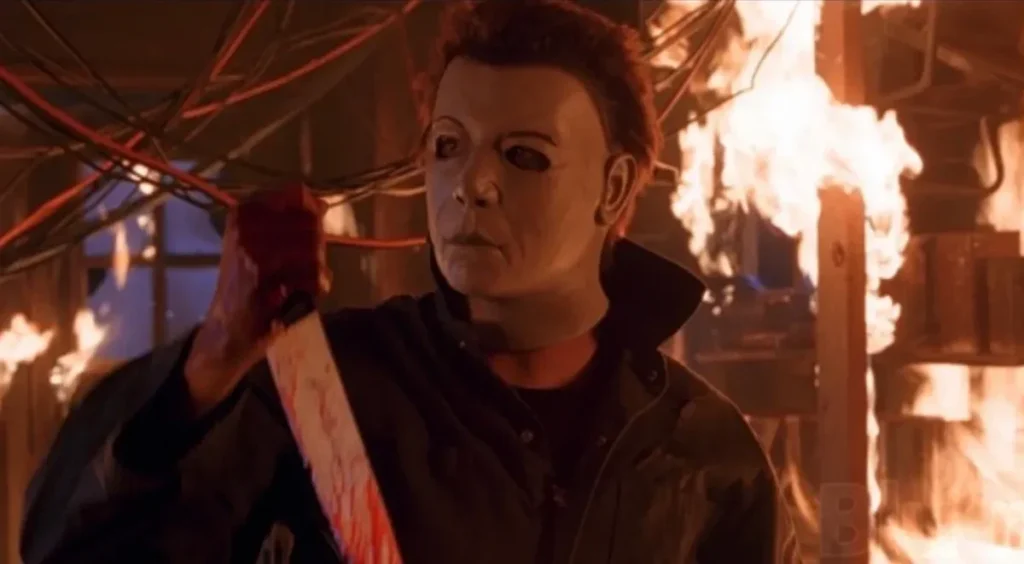
The story opens at the Gracey Mental Institution, where Laurie Strode (Jamie Lee Curtis) resides following the tragic, mistaken-identity climax of Halloween H20. After a tense opening confrontation that resolves Laurie’s three-decade conflict with her brother, the focus shifts to Haddonfield, Illinois. Opportunistic producer Freddie Harris (Busta Rhymes) and his partner Nora (Tyra Banks) launch “Dangertainment,” a live internet webcast where college students—including Sara Moyer (Bianca Kajlich) and Rudy (Sean Patrick Thomas)—spend Halloween night inside the abandoned Myers house. Unbeknownst to the crew, Michael Myers (Brad Loree) resides in the subterranean tunnels beneath the house and begins systematically eliminating the contestants on live streaming video.
Y2K Found-Footage Aesthetics, High-Paced Kills, and Soundtrack
Rick Rosenthal incorporates early digital camera technology by blending traditional cinematic cinematography with grainy head-cam footage and multi-angle monitor screens. This approach creates a kinetic, claustrophobic visual style that mirrors early 2000s media consumption. The kill set pieces are fast-paced and varied, utilizing classic slasher tropes alongside found-footage perspective shifts. Composer Danny Lux updates John Carpenter’s legendary theme with techno synth elements and hip-hop influences that align with the era’s pop culture landscape.
Charismatic Cast Dynamics and Martial Arts Showdowns
Jamie Lee Curtis provides a powerful, emotional prologue that officially caps her original continuity run as Laurie Strode. Bianca Kajlich brings classic “final girl” vulnerability and resourcefulness to Sara Moyer, supported by Ryan Merriman as a tech-savvy internet watcher assisting her remotely. However, it is Busta Rhymes who steals the show as Freddie Harris, bringing high energy, memorable one-liners, and martial arts kicks to his confrontation with Michael Myers. Stuntman Brad Loree portrays Michael with cold, methodical efficiency throughout the broadcast mayhem.
The Final Verdict
Ultimately, this Halloween: Resurrection review highlights a campy, highly entertaining snapshot of early 2000s horror cinema. Driven by Rick Rosenthal’s high-tech premise, Busta Rhymes’ energetic performance, and fun found-footage gimmicks, it stands out as an unapologetically fun, wild chapter in the long-running slasher franchise.
Information
- Title: Halloween: Resurrection
- Release Date: July 12, 2002
- Director: Rick Rosenthal
- Stars: Jamie Lee Curtis, Busta Rhymes, Bianca Kajlich, Tyra Banks, Luke Kirby, Sean Patrick Thomas, Daisy McCrackin, Brad Loree
- Genre: Sci-Fi, Adventure, Action
This post is part of Halloween Movies Ranked