
Movies
Indiana Jones and the Kingdom of the Crystal Skull Review
Review Ratings
Final Review Score
Great
Directed by Steven Spielberg from a story by George Lucas and Jeff Nathanson, Indiana Jones and the Kingdom of the Crystal Skull (2008) reunited the original creative team nineteen years after The Last Crusade. Shifting the saga’s backdrop from the 1930s pulp era to the atomic paranoia of 1957, the film traded biblical relics and Nazi villains for Soviet agents, Area 51, and interdimensional sci-fi lore. In this detailed Indiana Jones and the Kingdom of the Crystal Skull movie review, we examine how Harrison Ford’s iconic return, family revelations, jungle chase sequences, and B-movie homage shaped this fourth installment.
Atomic Testing, Soviet Threats, and Akator’s Secret
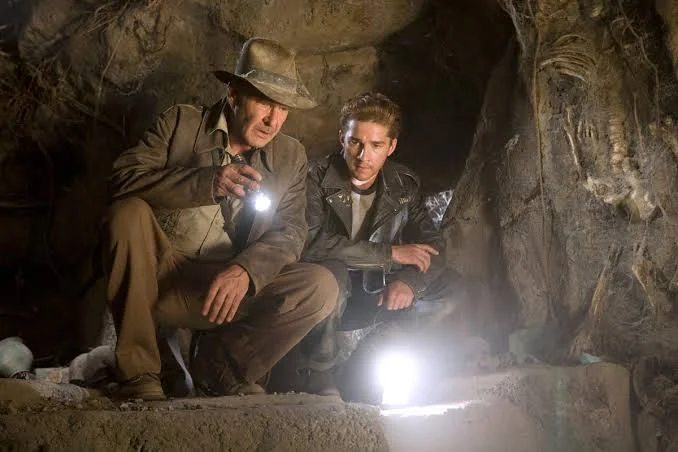
Set during the height of the Cold War in 1957, the narrative opens with an aging Indiana Jones (Harrison Ford) being abducted by Soviet agents led by the cold, psychic-obsessed Dr. Irina Spalko (Cate Blanchett) to locate a mummified alien corpse inside Area 51. After narrowly surviving a nuclear bomb test in a Nevada desert town, Indy is recruited by rebellious grease-monkey youth Mutt Williams (Shia LaBeouf). The pair travels to Peru to track down Indy’s old colleague Harold Oxley and the telepathic Crystal Skull of Akator. Along the way, Indy reunites with his true love, Marion Ravenwood (Karen Allen), discovering shock family revelations while racing against Spalko’s military convoy through the Amazonian jungle to return the skull to its temple chamber.
Harrison Ford’s Veteran Charm, Mutt’s Chemistry, and B-Movie Tropes
Harrison Ford slides back into the fedora effortlessly, imbuing an older Indy with grit, humor, and seasoned wisdom. The film embraces 1950s pop culture tropes—ranging from motorcycle chases across Marshall College and diner brawls to atomic testing grounds and Soviet paranoia. Action set pieces feature classic stunt craft alongside CGI enhancements, highlighted by a multi-vehicle jungle pursuit featuring sword duels, giant soldier ants, and triple-waterfall plunges.
Production Design, Digital Effects, and John Williams’ Themes
Cinematographer Janusz Kamiński emulated Douglas Slocombe’s vivid lighting while integrating modern visual effects from Industrial Light & Magic. Composer John Williams provided another rich score, introducing an eerie, theremin-infused theme for the Crystal Skull alongside a fiery march for Irina Spalko and a playful motif for Mutt.
The Final Verdict
Ultimately, this Indiana Jones and the Kingdom of the Crystal Skull review evaluates an entertaining, nostalgic, and visually vibrant chapter in the saga. Driven by Harrison Ford’s magnetic presence, Karen Allen’s welcome return, high-energy set pieces, and a heartwarming resolution, it stands as a fun 1950s sci-fi expansion of the franchise.
Information
- Title: Indiana Jones and the Kingdom of the Crystal Skull
- Release Date: May 22, 2008
- Director: Steven Spielberg
- Key Cast: Harrison Ford, Cate Blanchett, Shia LaBeouf, Karen Allen, Ray Winstone, John Hurt, Jim Broadbent
- Genre: Action, Adventure, Sci-Fi
This post is part of Indiana Jones Movies Ranked