
Movies
Indiana Jones and the Last Crusade Review
Review Ratings
Final Review Score
Amazing
Directed by Steven Spielberg from a story by George Lucas and Menno Meyjes, Indiana Jones and the Last Crusade (1989) brought the original Indiana Jones trilogy to a glorious, emotionally resonant conclusion. Balancing the dark intensity of Temple of Doom with the triumphant, globe-trotting spirit of Raiders of the Lost Ark, the film refocused the saga on religious mythology and family dynamics. In this detailed Indiana Jones and the Last Crusade movie review, we explore how legendary screen chemistry, world-class stunt set pieces, and the quest for the Holy Grail created a cinematic masterpiece.
The Holy Grail Quest, Father-Son Dynamics, and Nazi Adversaries
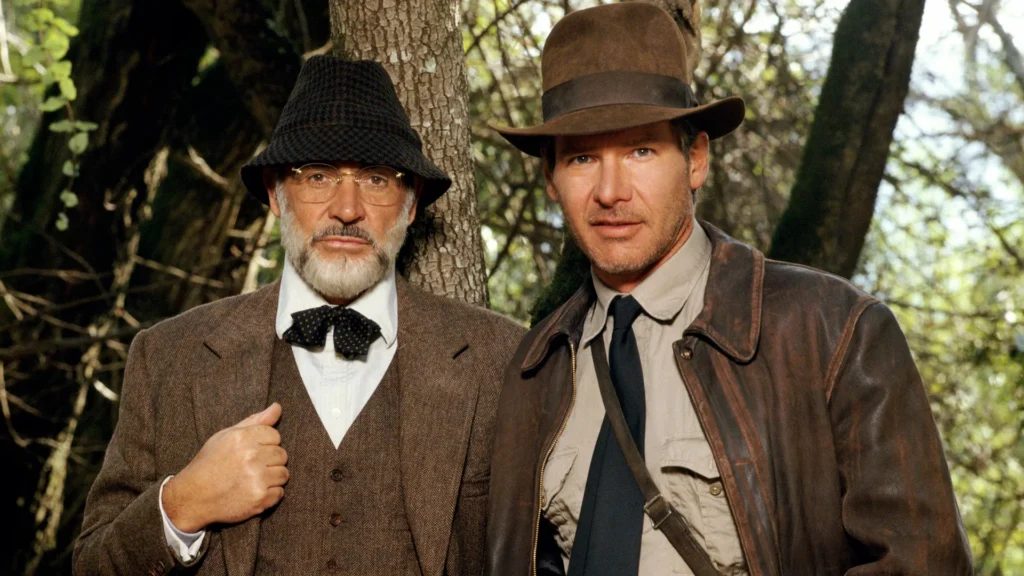
Set in 1938, the story kicks off when intrepid archaeologist Indiana Jones (Harrison Ford) learns that his estranged father, Holy Grail scholar Professor Henry Jones Sr. (Sean Connery), has vanished while searching for the legendary chalice of Christ. Armed with his father’s diary containing lifetime research, Indy travels from the rat-infested catacombs of Venice to a Nazi-occupied castle on the Austrian border. Joined by museum curator Marcus Brody and Dr. Elsa Schneider, father and son must reconcile their strained relationship while racing against Nazi forces and wealthy industrialist Walter Donovan to reach the Canyon of the Crescent Moon before the Grail falls into evil hands.
Unmatched Ford-Connery Dynamics and Practical Stunt Perfection
The core heart of the film lies in the brilliant comedic and dramatic chemistry between Harrison Ford and Sean Connery. Connery’s intellectual, stern, yet bumbling Henry Sr. perfectly offsets Ford’s rugged action heroism. Action set pieces remain landmark achievements in practical filmmaking—ranging from a thrilling prologue featuring River Phoenix as young Indy on a circus train to a high-speed motorcycle chase, a Venetian boat duel, and a breathtaking desert confrontation involving a massive WWI tank.
John Williams’ Iconic Score, Production Design, and Climax
Visual production design shines across ornate European castles, dusty Middle Eastern deserts, and ancient temple traps testing Indy’s faith through three deadly trials. Composer John Williams delivered one of his finest scores, weaving the heroic Indiana Jones main march alongside a solemn, deeply spiritual motif for the Holy Grail and upbeat comedic fanfares for the father-son banter.
The Final Verdict
Ultimately, this Indiana Jones and the Last Crusade review celebrates a near-perfect action-adventure film. Driven by Steven Spielberg’s masterful pacing, Harrison Ford and Sean Connery’s infectious screen partnership, spectacular practical stunts, and a heart-warming resolution, it stands as an enduring classic of modern cinema.
Information
- Title: Indiana Jones and the Last Crusade
- Release Date: May 24, 1989
- Director: Steven Spielberg
- Key Cast: Harrison Ford, Sean Connery, Denholm Elliott, Alison Doody, John Rhys-Davies, Julian Glover
- Genre: Action, Adventure
This post is part of Indiana Jones Movies Ranked