
Movies
WALL-E Review
Review Ratings
Final Review Score
Amazing
Directed by Andrew Stanton (Finding Nemo) and co-written with Jim Reardon, WALL-E (2008) stands as one of the most artistically daring films in Pixar Animation Studios’ history. Channeling the visual storytelling traditions of Charlie Chaplin and Buster Keaton, the film’s nearly dialogue-free opening act crafted an intimate romance against a vast, environmental sci-fi backdrop. In this detailed WALL-E movie review, we explore how Ben Burtt’s groundbreaking sound design, Roger Deakins’ cinematic lighting consultation, environmental themes, and Thomas Newman’s transcendent score forged a modern cinematic classic.
Earth’s Solitary Waste Collector, EVE, and the Starliner Axiom
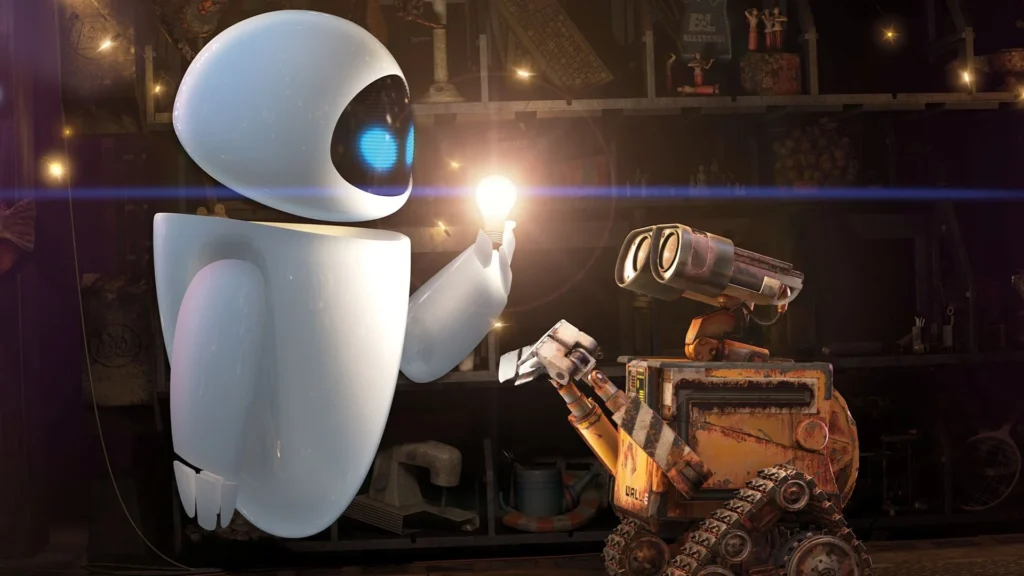
Set in a desolate 2805, the story follows WALL-E (Waste Allocation Load Lifter: Earth-Class), the last active trash-compacting robot left on a trash-smothered, abandoned Earth. Over seven centuries of solitude, WALL-E develops curiosity and a gentle soul, collecting human trinkets and rewatching VHS tapes of Hello, Dolly!. His quiet routine is shattered by the arrival of EVE (Extraterrestrial Vegetation Evaluator), a sleek reconnaissance probe sent by the starliner Axiom to scan Earth for signs of sustainable life. When EVE secures a living seedling plant discovered by WALL-E, she enters a dormant state, prompting WALL-E to hitch a ride across deep space to protect her, ultimately triggering a revolution aboard the Axiom against consumer overconsumption and automated complacency.
Sound Design as Dialogue, Visual Characterization, and Environmental Allegory
Legendary sound designer Ben Burtt (Star Wars, Raiders of the Lost Ark) created an entire emotional vocabulary for WALL-E and EVE using mechanical whirs, hydraulic clicks, synthesized chimes, and vocal textures. Without traditional spoken dialogue for large stretches, Pixar’s animators communicated longing, hesitation, courage, and affection purely through optical lens movements, body posture, and eye tilt angles. Jeff Garlin brings effective humor as the well-intentioned Captain of the Axiom, while Sigourney Weaver lends authoritative calm as the ship’s automated computer.
Visual Fidelity, Photorealistic Lighting, and Thomas Newman’s Score
To capture a photorealistic cinematic look, Pixar brought in legendary cinematographer Roger Deakins as a visual consultant, adjusting lens flare physics, depth of field, and camera movement to mirror 1970s anamorphic sci-fi cinema. Sequences such as WALL-E and EVE’s fire extinguisher spacewalk dance outside the Axiom remain visual high points of animated cinema. Composer Thomas Newman crafted a sweeping, futuristic orchestral score blended with electronic textures and vintage musical theater cues that elevated the film’s emotional weight.
The Final Verdict
Ultimately, this WALL-E review celebrates an extraordinary, timeless triumph of visual storytelling. Driven by Andrew Stanton’s visionary direction, Ben Burtt’s genius audio design, breathtaking visual cinematography, and a heartfelt message about love and human stewardship, it remains a crowning jewel in Pixar’s filmography.
Information
- Title: WALL-E
- Release Date: June 27, 2008
- Director: Andrew Stanton
- Key Cast: Ben Burtt, Elissa Knight, Jeff Garlin, Fred Willard, MacInTalk, John Ratzenberger, Kathy Najimy, Sigourney Weaver
- Genre: Animation, Sci-Fi, Adventure, Romance, Family
This post is part of Pixar Movies Ranked