
Movies
Wes Craven’s New Nightmare Review
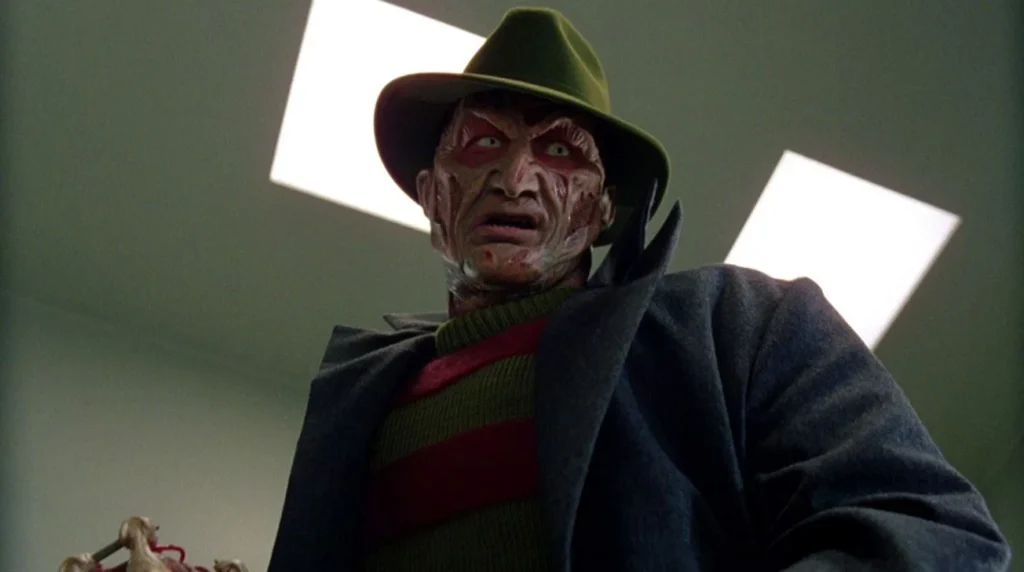
Written and directed by Wes Craven, Wes Craven’s New Nightmare (1994) shattered the fourth wall to pioneer self-referential horror two years before Scream. Reclaiming his iconic creation from the realm of pop-culture parody, Craven crafted a sophisticated, psychologically complex thriller that explores the nature of storytelling, film production, and real-world fear. In this detailed Wes Craven’s New Nightmare movie review, we examine how meta-narrative brilliance, darker creature redesigns, and exceptional lead performances produced one of the most intellectually satisfying horror films of the 1990s.
Hollywood Reality, Earthquakes, and the Awakening of an Ancient Evil
Set in real-world Los Angeles, actress Heather Langenkamp plays a fictionalized version of herself, ten years after starring in the original film. As New Line Cinema executives plan a anniversary sequel, Heather begins experiencing terrifying earthquakes and disturbing phone calls echoing Freddy Krueger’s voice. Tragically, after her special-effects husband Chase (David Newsom) dies in a mysterious car accident featuring slash marks, her young son Dylan (Miko Hughes) exhibits severe behavioral distress and hypnotic trances. Visiting director Wes Craven, Heather learns the truth: the film franchise functioned as a prison for an ancient evil entity. With the series concluded, the malevolent force has adopted Freddy’s form and seeks to cross over into reality by destroying the actress who first defeated him. To save her son, Heather must step back into the role of Nancy one final time to confront the entity in its subterranean underworld.
Dark Modern Visual Redesign, Gothic Set Pieces, and J. Peter Robinson’s Score
Director Wes Craven strips away the campy comedy of later sequels, redesigning Freddy into a taller, muscular, and menacing entity wearing a leather trench coat, organic claw glove, and darker facial scarring. The production relies on gothic visual staging, incorporating real Los Angeles earthquake destruction, towering staircase set pieces, and oppressive shadows. Composer J. Peter Robinson delivers a ominous, heavy orchestral score that discards synthesizer lightness for deep brass fanfares and terrifying string arrangements.
Heather Langenkamp’s Career-Best Performance and Robert Englund’s Dark Return
Heather Langenkamp delivers the finest performance of her career, effortlessly transitioning from a grounded, protective real-world mother to an empowered cinematic heroine. Robert Englund shines brightly in a dual role, playing himself as a gentle artist and portraying the menacing, ancient iteration of Freddy Krueger with absolute authority. Miko Hughes turns in an astonishingly mature performance as young Dylan, while cameos from John Saxon, Robert Shaye, and Wes Craven add rich authenticity to the film’s Hollywood backdrop.
The Final Verdict
Ultimately, this Wes Craven’s New Nightmare review celebrates a brilliant, highly inventive, and ahead-of-its-time horror masterpiece. Driven by Wes Craven’s sharp screenplay, Heather Langenkamp’s powerful lead performance, and a genuinely frightening redesign of its legendary monster, it stands as an elite triumph in the franchise.
Information
- Title: Wes Craven’s New Nightmare
- Release Date: October 14, 1994
- Director: Wes Craven
- Stars: Heather Langenkamp, Robert Englund, Miko Hughes, David Newsom, John Saxon, Wes Craven, Theresa Randle
- Genre: Horror, Mystery, Fantasy
This post is part of A Nightmare on Elm Street Movies Ranked