
Games
Mortal Kombat Gold Review
Review Ratings
Final Review Score
Decent
Developed by Eurocom and published by Midway Home Entertainment, Mortal Kombat Gold (1999) arrived as an exclusive launch-window title for the Sega Dreamcast. Serving as an upgraded revision of 1997’s Mortal Kombat 4, the game brought the series into the 128-bit sixth generation of hardware. By bringing back beloved legacy fighters, introducing new arenas, and enhancing weapon mechanics, Gold aimed to deliver the definitive console home version of the franchise’s initial foray into 3D polygon fighting. In this detailed Mortal Kombat Gold game review, we examine how roster expansions, visual upgrades, and fast-paced arcade gameplay defined this unique Dreamcast chapter.
Shinnok’s Netherrealm War, Returning Champions, and Roster Expansions
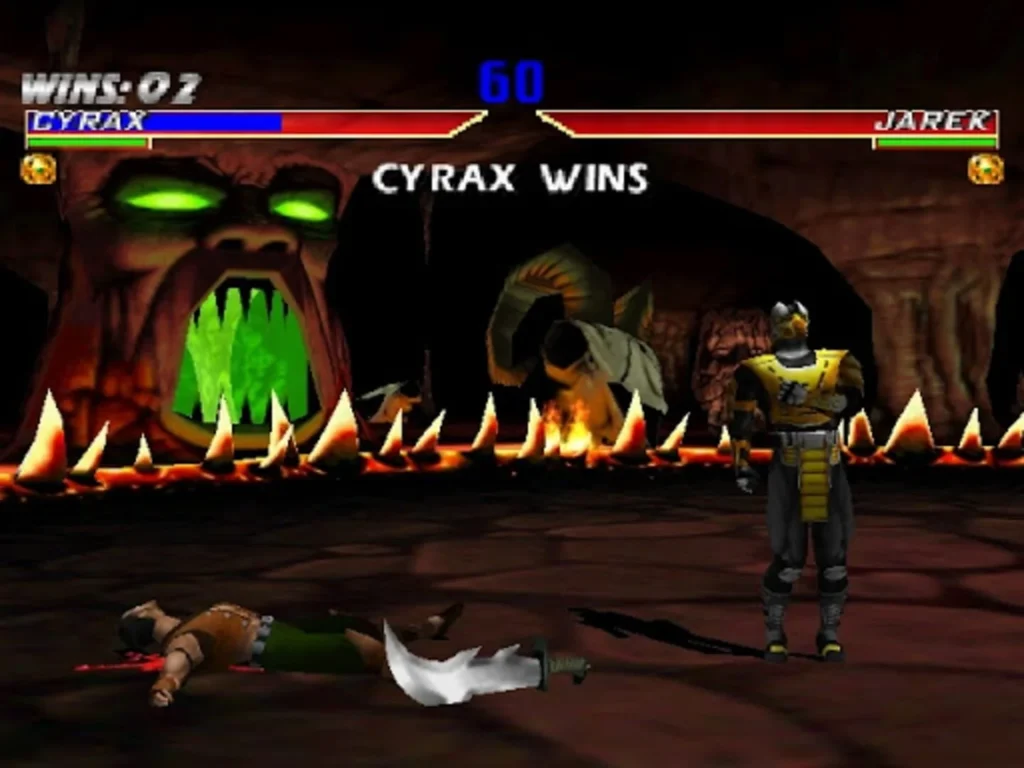
The story follows the narrative arc of Mortal Kombat 4, detailing fallen elder god Shinnok and sorcerer Quan Chi as they escape their Netherrealm imprisonment to wage war against Earthrealm and the Elder Gods. While retaining the original MK4 lineup—including Raiden, Liu Kang, Scorpion, Sub-Zero, and Sonya Blade—Mortal Kombat Gold significantly expanded the character select screen. Classic fan favorites Kitana, Baraka, Mileena, Cyrax, and Kung Lao returned to the fray alongside secret characters Sektor, Noob Saibot, Goro, and Meat, giving the game a much broader character selection than its arcade predecessor.
3D Weapon Combat, Sidestepping, and Expanded Arenas
Gameplay remains anchored to Mortal Kombat 4‘s hybrid combat engine, blending fast-paced 2D combo mechanics with 3D sidestepping and weapon-drawing commands. Each fighter can draw a unique weapon—such as swords, axes, or specialized blades—to execute high-damage strikes or throw them across the arena. The Dreamcast hardware allowed for crisp 60fps performance, higher resolution textures, and dynamic lighting across classic stages alongside new additions like The Church, Ladder, Netherrealm, and Soul Chamber. Cinematic 3D Fatalities and environmental interactions returned in full force.
Audio Enhancements, Visual Polish, and Hardware Re-Releases
Eurocom utilized the Dreamcast’s disc capacity to deliver sharp arena audio, crunching impact sound design, and full voice acting for story cutscenes. Following an initial launch print that suffered from technical glitches, Midway released a patched revision (distinguished by a red disc surface) that resolved stability issues and texture loading glitches, solidifying its place among Dreamcast arcade ports.
The Final Verdict
Ultimately, this Mortal Kombat Gold review evaluates a fun, nostalgic, and feature-packed Dreamcast classic. Driven by its expanded classic roster, crisp 60fps 3D visuals, and solid weapon combat mechanics, it stands as the ultimate version of Mortal Kombat 4 and an intriguing milestone in the franchise’s evolution.
Information
- Title: Mortal Kombat Gold
- Release Date: September 9, 1999
- Developers: Eurocom, Midway Home Entertainment
- Key Characters: Shinnok, Quan Chi, Raiden, Liu Kang, Kitana, Baraka, Cyrax, Mileena, Kung Lao, Sub-Zero, Scorpion
- Genre: 3D Fighting, Action
This post is part of Mortal Kombat Games Ranked