
Games
Mortal Kombat: Special Forces Review
Review Ratings
Final Review Score
Decent
Released for the original PlayStation, Mortal Kombat: Special Forces (2000) represents one of the most turbulent and notorious chapters in Midway Games’ history. Developed during a tumultuous period that saw key series creators depart mid-production, this top-down third-person action-adventure spin-off shifted focus away from sorcery and tournament fighting to highlight military gunplay and urban crime syndicate hunting. In this detailed Mortal Kombat: Special Forces game review, we examine how Jax’s solo mission, Black Dragon lore, industrial level design, and experimental mechanics fit into the franchise’s history.
The Black Dragon Breakout, Jax’s Vengeance, and the Eye of Chitian
Chronologically serving as a prequel to the entire franchise, the narrative centers on Major Jackson “Jax” Briggs of the United States Special Forces. When ruthless crime lord Kano orchestrates a massive prison breakout to free his high-ranking Black Dragon operatives—No Face, Tasia, Jarek, and Tremor—Jax embarks on a solo covert mission to track them down. As Jax pursues the criminal Syndicate from high-security detention facilities and urban warehouse districts to ancient underground ruins, he uncovers Kano’s true objective: locating an interdimensional artifact known as the Eye of Chitian, capable of opening portals directly into Outworld.
Top-Down Brawling, Firearms Combat, and Industrial Level Design
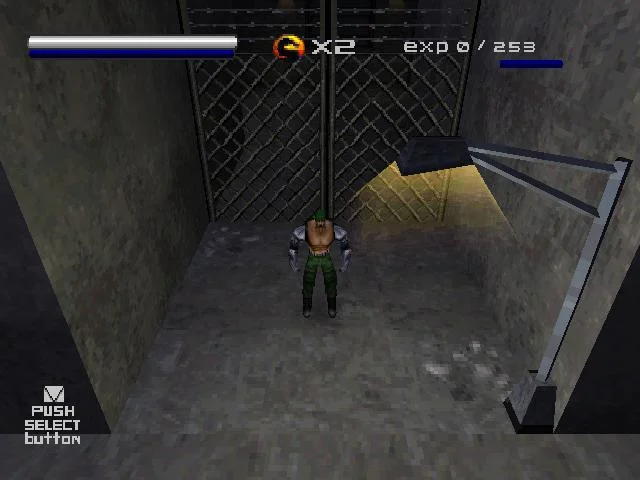
Departing completely from standard fighting planes, Special Forces utilizes a third-person, top-down isometric camera perspective. Players pilot Jax through 3D environments, executing hand-to-hand martial arts combos, ground pounds, and throw maneuvers alongside an arsenal of firearms—including shotguns, assault rifles, grenade launchers, and remote detonators. The campaign emphasizes key-hunting, puzzle solving, inventory management, and stealth targeting while battling waves of Black Dragon mercenaries across warehouse complexes, sewers, and temple ruins.
Character Debuts, Audio Aesthetics, and Franchise Lore Impact
Despite production setbacks, the game holds historical value for hardcore lore enthusiasts. It introduced the earth-elemental ninja Tremor long before his playable fighting debut in Mortal Kombat X, while establishing the initial rivalry between Special Forces and the Black Dragon syndicate. Audio lead Vince Pontarelli delivered a dark, industrial electronic soundtrack featuring heavy bass rhythms and metallic ambient tracks that complemented the game’s urban gritty atmosphere.
The Final Verdict
Ultimately, this Mortal Kombat: Special Forces review evaluates a unique, curious, and experimental chapter in the series. While notorious for its troubled development cycle, its expansion of Jax’s backstory, introduction of key Black Dragon lore, and ambient industrial presentation make it a fascinating artifact of the 32-bit era.
Information
- Title: Mortal Kombat: Special Forces
- Release Date: June 30, 2000
- Developers: Midway Games
- Key Characters: Jax Briggs, Kano, Tremor, Jarek, Tasia, No Face
- Genre: Action-Adventure, Third-Person Shooter, Beat ’em up
This post is part of Mortal Kombat Games Ranked