
Games
Mortal Kombat Trilogy Review
Review Ratings
Final Review Score
Amazing
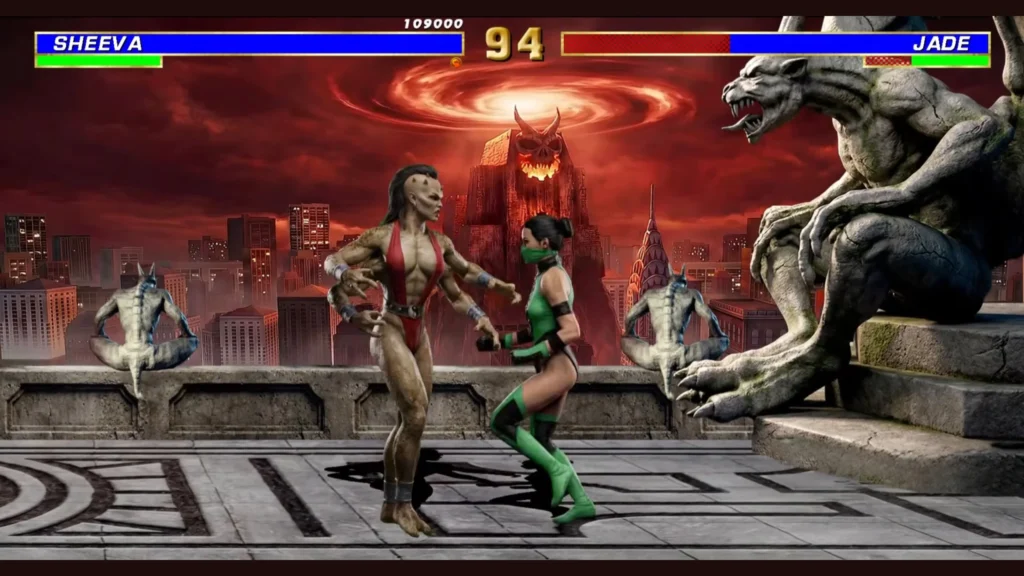
Designed by Ed Boon and John Tobias, Mortal Kombat Trilogy (1996) arrived as the ultimate 32-bit home console update to Ultimate Mortal Kombat 3. Released for the PlayStation, Nintendo 64, Sega Saturn, and PC, the game gathered virtually every character, stage, secret, and finishing move from the first four 2D arcade entries into a single jam-packed package. In this detailed Mortal Kombat Trilogy game review, we examine how an expansive roster, new gameplay meters, legacy boss selections, and fast-paced kombat capped off the digitized 2D era of the franchise.
Earthrealm Outworld Fusion, All-Star Roster, and Secret Ninja Legends
Narratively, the game centers on the climax of Shao Kahn’s invasion of Earthrealm, merging dimensions and pitting Earth’s defenders against Outworld’s forces. The standout feature is its massive selection of over 30 playable warriors. Alongside the full UMK3 cast, Trilogy reintroduced classic classic fighters including original MK1 Raiden, MK1 Kano, MK2 Kung Lao, MK2 Jax, and a newly filmed digitized Johnny Cage (played by Chris Alexander). It also expanded the lore with mysterious translucent ninjas Chameleon and Khameleon, while granting players direct control over brutal boss characters like Goro, Kintaro, Motaro, and Shao Kahn.
The Aggressor Meter, Brutalities, and Fast-Paced Engine Tweaks
Gameplay refined the high-speed Run-button combo mechanics introduced in MK3 while introducing the Aggressor Meter. As combatants strike and block, this bar fills up to temporarily grant enhanced movement speed and increased attack damage. The finishing move roster reached its peak excess, featuring Fatalities, Animalities, Babalities, Friendships, Pit Kills, and devastating multi-hit button-sequence Brutalities that violently exploded opponents into piles of bones and limbs.
CD Audio Soundtrack, Arcade Presentation, and 32-Bit Graphics
Leveraging CD-ROM technology on PlayStation and Saturn, the game featured Redbook CD audio that bundled Dan Forden’s classic electronic tracks from MK1, MK2, and MK3 alongside full speech samples. While load times affected shapeshifting mechanics on CD platforms compared to the instant cartridge layout of the N64, the overall visual presentation showcased pristine digitized sprites, dynamic stage backgrounds, and iconic atmosphere.
The Final Verdict
Ultimately, this Mortal Kombat Trilogy review celebrates a wildly fun, feature-loaded, and nostalgic tribute to the digitized arcade era. Driven by Ed Boon and John Tobias’ core gameplay loop, an unmatched legacy roster, and pure kombat chaos, it stands as the definitive capstone of 2D Mortal Kombat history.
Information
- Title: Mortal Kombat Trilogy
- Release Date: October 10, 1996
- Developers: Midway Games, Avalanche Software
- Key Characters: Liu Kang, Johnny Cage, Raiden, Shao Kahn, Goro, Kintaro, Motaro, Sub-Zero, Scorpion, Chameleon
- Genre: 2D Fighting, Action
This post is part of Mortal Kombat Games Ranked